
The Epstein Files halftime show!
Bread and circus is alive and well

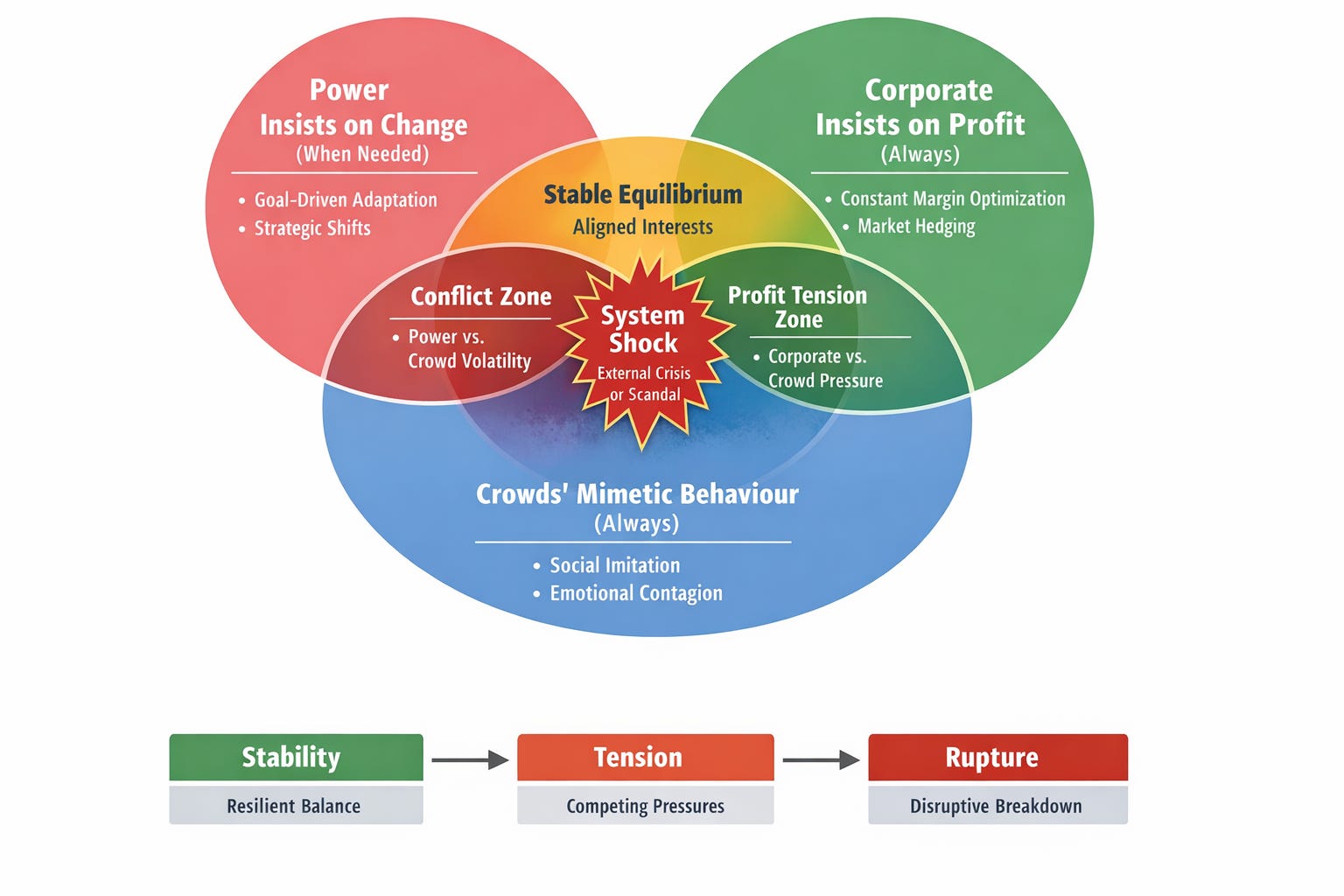
The Epstein Files weren’t a scandal. They were a flare shot into a sewer.
For a brief second, the light hit everything — politicians, financiers, fixers, socialites, intelligence-adjacent operators — and the public saw the outline of something rotten and interconnected. Then the light dimmed. And the sewer kept flowing.
If you’re surprised, you haven’t been paying attention.
There is always a ruling minority. Mosca wasn’t being cynical; he was being descriptive. Power condenses. It networks. It protects itself. It doesn’t dissolve because you’re outraged. It reorganizes.
Pareto would tell you what happens next: circulation. Some elites burn. Others rotate in. The names change; the architecture doesn’t. When Epstein became radioactive, the question inside elite circles wasn’t “How did this happen?” It was “What can we afford to lose?”
And that’s the core reality the Files exposed: expendability is tiered.
You don’t torch the structure to save the decor. You sacrifice the decor to protect the structure.
Selective disclosures weren’t incompetence. They were calibration. Release enough to bleed pressure. Withhold enough to protect networks that cross party lines, corporate boards, law firms, foundations, and agencies. The system understands load-bearing beams. It knows which pillars cannot be touched without bringing down the ceiling on everyone.
Weber understood the vulnerability: legitimacy. Authority is theater backed by force. If people stop recognizing it as legitimate, it becomes naked coercion — and naked coercion is unstable in a society that still pretends to be democratic. So the rituals begin.
Hearings.
Grave expressions.
Task forces.
Carefully worded condemnations.
The performance isn’t optional. It’s oxygen.
But here’s where Girard slices deeper. The crowd doesn’t just demand justice. The crowd demands a sacrifice. Outrage spreads mimetically — you see disgust, you mirror disgust, the temperature rises. Social media isn’t the cause; it’s the accelerant. Fury becomes contagious. And contagious fury is dangerous.
So the system offers what it always offers in moments like this: a scapegoat that absorbs the moral shock.
Epstein is dead.
Maxwell is imprisoned.
A few reputations are singed.
Case closed — or close enough.
The crowd feels motion. The temperature drops. The structure survives.
You want to know what didn’t happen? Cross-faction exposure at the structural level. No sweeping financial audits of every enabling institution. No deep excavation of intelligence ties. No bipartisan purge of networks that quietly overlap in philanthropy, finance, and policy. Because that’s where the real insulation lives — in shared interests that make partisan warfare look like professional wrestling.
Corporations behaved exactly as designed. They didn’t rage. They didn’t moralize. They calculated. Distance the brand. Reassess exposure. Seal settlements. Preserve capital. Profit is immune to disgust. It responds only to risk.
Media oscillated between outrage and containment. Headlines blazed. Then narratives narrowed. Focus on the grotesque details. Fixate on the individual monster. Keep the spotlight tight enough that systemic questions feel speculative, conspiratorial, impolite.
No secret cabal required. Incentives align behavior automatically.
Politicians performed shock while checking donor lists.
Agencies promised transparency while citing procedure.
Law firms buried liabilities in paperwork.
Banks quietly reviewed compliance frameworks.
Everyone moved — but within limits.
That’s the word: limits.
The Epstein Files slammed into the boundary of what the system can allow to be fully known. And at that boundary, the machine stiffened.
People like to fantasize about collapse — about the whole thing crumbling under the weight of its own corruption. History says otherwise. Systems like this don’t collapse from exposure. They collapse when internal factions turn on each other so violently that shared protection fails.
That didn’t happen.
What we saw instead was coordinated self-preservation without coordination. A networked elite class that may hate each other in public but shares a primal interest in not detonating the ecosystem that feeds them all.
And the public? Caught in the half-light.
Operating on fragments. Leaks. Redactions. Rumors. Court documents with black bars where names should be. The outrage is real — but it’s fueled by partial information. That makes it powerful, but also easy to redirect.
Rage needs a target.
The system provides one.
Cycle resets.
You can feel the instability in moments like this. Walls tremble. Careers wobble. Boards panic. But tremble isn’t collapse. Wobble isn’t rupture.
Real rupture would mean protected nodes getting hit across party lines, across corporate hierarchies, across institutional silos — simultaneously. It would mean enforcement indifferent to status. It would mean sunlight that doesn’t stop at donor thresholds.
That is historically rare.
So what are the Epstein Files, really?
They’re not proof that the system is collapsing.
They’re proof that the system knows how to metabolize horror.
Calculated concession.
Managed outrage.
Strategic sacrifice.
Structural continuity.
Mosca explains the minority rule.
Pareto explains the rotation.
Weber explains the obsession with legitimacy.
Girard explains the wildfire of outrage and the necessity of a scapegoat.
Put it together and the picture is brutal: this wasn’t chaos. It was stress-testing.
And the machine passed.
Not cleanly.
Not beautifully.
But effectively enough to keep breathing.
The alley isn’t romantic. It’s concrete and closed. You can scream in it. You can light flares. You can pound the walls.
But unless the foundation cracks — unless the protected layers fracture from within — the structure doesn’t fall.
It absorbs.
It adapts.
It survives.
That’s the lesson.